Showing posts with label zone 4. Show all posts

Monday, January 7, 2013

Reflections on the Summer Garden Part 1

                             Beebalm (Monarda Didyma)
 
Monarda didyma 'Raspberry Wine'

In the throes of winter, I like to reflect on the summer with all of its glorious warmth and welcoming garden treasures.  So let's start with a reflection on Beebalm!

Beebalm is a must-have deer resistant garden plant.  I honestly can't say enough good things about it!  Adaptable to almost any soil (mine grow in clay soil) these beautiful herb plants shine when in bloom.  Hardy to zones 3 (protection suggested in 3)-9 these lovelies are the plant of choice for hummingbirds and hummingbird moths.  As a member of the mint family they like to spread, but they are not quite as aggressive as their mint cousins.  I like to divide them every 2-3 years to keep up their vigor and also spread them to new places around the yard. 

Full to part sun will keep them happy.  Beebalm typically blooms from July well into August.  I've seen mine start blooming at the end of a particularly warm June.

 Monarda didyma 'Jacob Cline' is irresistible to hummingbirds when it blooms.  A good mildew resistant variety.

During wet or humid summers or if plants are crowded (preventing good air flow) some varieties are prone to get powdery mildew.  Powdery mildew looks like fuzzy white patches and can cover the leaves and stems of the plant.  Personally, I turn a blind eye to the mildew and let nature take its course.  It won't kill the plants nor will it prevent them from blooming.  I'm also not a perfectionist!  If you prefer to combat mildew, choose an organic-use approved fungicide such as a copper based spray like Champ® or a product called Mildew Cure®. 

 Monarda didyma 'Blue Stocking' is my favorite!  A lovely heirloom variety from the 19th century.

Green budworms, although not common, can also bother certain varieties.  These small light green worms burrow into the buds of the flowers, sometimes destroying them before they can open.  Using organic sprays is a must in order not to harm the birds and bees that visit these flowers.  I find the best thing that works is an insecticidal soap, such as Safer®, sprayed on the buds at dusk.  Spraying at this time reduces the chances of beneficial insects and birds from coming into contact with it (just to be safe!).  It will also stay wetter longer with the absence of the sun to dry it up, as most organic sprays are only effective as long as they're wet.  Hand picking of the worms and destroying overly infested buds is also a great way to rid them from the garden.  

Be sure to read and follow the directions on any spray, should you decide to take that route.  Safety first, even in the garden!!  

Sanitation is key to help win the war on bugs and fungus.  At the end of the season be sure to remove all infected parts of the plant from the garden.  This will help reduce the chance of recurrence.

                               Monarda didyma 'Stones Throw Pink'  A lovely rosy color!

Beebalm is a New York native and was used by the settlers as far back as the 18th century.  It traveled by way of seeds to Europe in the mid-1700's and has since naturalized there.  Many hybrids have been cultivated since then.

The smallest beebalm grows to 12 inches and the larger varieties can reach up to 4 feet!  The taller varieties make a wonderful border plant.  Colors range from flaming red to mellow pinks and violet purples to white.

It's scented foliage has lemony undertones and has a wide range of uses in cooking, tea, medicines, and potpourri.  It's colorful edible flowers liven up fresh summer salads!

The flowers are perched upon strong stems and are a wonderful and long lasting cut flower for your summer bouquets.  


            Monarda didyma 'Raspberry wine'  Close-up shot.  Also a mildew resistant variety.

A truly endearing plant, Beebalm will surely become a favorite in your summer garden.  Between its colorful spiked blooms and the whimsical winged visitors that it attracts, you will have hours of enjoyment!



Wednesday, May 9, 2012

Gardening with a Camera

Adventures with a Macro Lens


    At first I was going to write about the differences between using a 50mm lens with macro filters and a macro lens.  I had visions of switching the lenses and taking the same shot for comparison and then I actually used my macro lens for the first time.  I can't bring myself to take it off of the camera now!  Once I attached the Canon 100mm f/2.8L Macro IS USM to my 5D EOS it blew my pants off!  If anyone would like to see some shots taken with a 50mm lens with macro filters, please check out my last blog post here: A zone 4 Spring .  Although I was quite happy using the macro filters with the 50mm lens, nothing could have prepared me for the HUGE difference I immediately experienced with the 100mm macro.

    I love gardening.  I love photography.  I love it when the two worlds collide!  Enough blabbing!  Here are my first macro photos!  

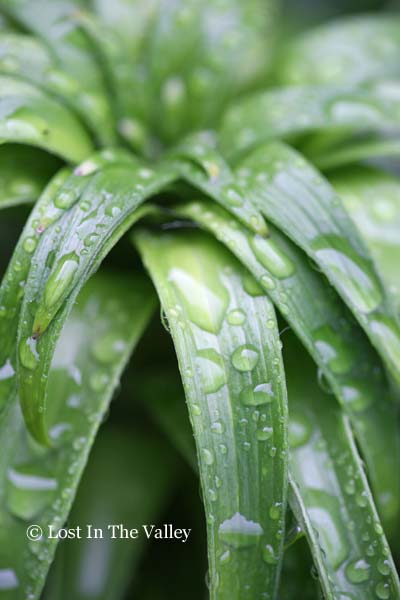
  It's been raining here, so I ran out in between the drops to discover how lovely rain could look through the lens!  Lilium tigrinum splendens

 I was pleasantly surprised by how close I could get.  Hosta

Hello ant!  Peony 'Festiva Maxima'

I ♥ this flower!  Narcissis Poeticus

Found this growing wild.  Aquilegia "Columbine"

This simple Iris is the earliest blooming one we have.

Here's another shot of it.  I unfortunately do not know what variety it is.  If any Iris lovers can identify this one, please leave a comment!

The silver foliage of Artemisia absinthium.  This plant is indeed the original source of absinthe.
The early flowers of Snowball viburnum 
 Garlic!

Even rust looks good under the maco lens!

More fun with rust! 
 TTV is a breeze with this lens!

This is Jerky The Turkey.  He was one of the pardoned turkeys when we used to raise meat birds.  He's 7 years old and I don't want to hear anyone call him ugly!


Jerky feathers.

Lastly, the queen of the farm.....or at least she thinks she's the queen!

    So there you have it folks!  I hope I did the lens justice on its maiden voyage while showcasing different textures.  I'm sure I've only scratched the surface.  I love this lens and hopefully do not sound like an advertisement for Canon!  It's just really a great lens!


Sunday, May 6, 2012

A Zone 4 Spring

What's Blooming in the North Country

    With winter behind us we look forward to glorious sunshine and warm weather.  We go out to our gardens and inspect the ground, waiting patiently for that first bulb or plant to spring up and take away the doldrums. The somewhat mild winter killed one of my very favorite perennials, due to lack of snow cover, but I'm grateful that I didn't lose more. 

    Spring was early for us this year.  Our apple trees bloomed a full three weeks early and are already past peak bloom.  With all but one clump of bulbs left blooming, I decided to photograph the remaining spring delights, before they too were gone.  Spring is so fleeting and yet in the short space of time that it occupies, it awakens all of our senses perhaps more than any other time of year.  One could say that it's because we are left deprived from a grey and cold winter that we appreciate spring so much.  After many dark and cold days, spring certainly does wonders for the poor soul that climbs out of their winter bunker to discover an explosion of flora and fauna.  I think the bulbs, flowering trees and shrubs, the scent of the apple trees perfuming the air, and that first touch of a warm breeze is the real reason no other season can come close to topping it. 

    Heirloom or "old fashioned" plants are my favorite plants.  They may not be as flashy as the new hybrids out there, but they are hardy and have stood the test of time.  The following photos were taken using macro filters on my 50mm lens.  Here are some old favorites in bloom now:

 Dicentra Spectabilis 'Alba'  "Old fashioned bleeding heart"
Unfortunately, the geese ate all of the flowers off of my pink one so I currently can't show it off!

 Viola 'Bowle's Black'
A Victorian favorite

Syringa vulgaris  "Old Fashioned Lilac"
I found this growing by an stone old foundation and took a slip of it.  A few years later I had a fine blooming specimen!

The 'dreaded' dandelion!  
I love them even if they are a weed!  They're also very nutritious to eat!

 Nepata mussini  "Catmint"
Love its scented foliage!

 Narcissus poeticus
Given to me by my grandmother, who loved to share her heirloom flowers! 

Convallaria majalis var. rosea  "Pink lily of the valley"
Smells just as good as its white counterpart below.

Convallaria majalis  "Lily of the valley"
Smells like heaven!

 Pulmonaria officinalis  "Lungwort"
It's been in bloom since early March and although the blooms are fading, there is still that gorgeous foliage to enjoy!

 Myosotis sylvatica 'Bobo Blue'  "Forget me not"
And who could forget these blue beauties!

 Viola- Not sure of variety.  This one has been with me since I was a child and has followed me across three states!  It's now naturalizing and blooms in abundance.

 Lamium  "Dead Nettle"
It has nice foliage too!

 Last, but certainly not least---Apple Blossoms!!!
Oh, apple blossoms how I've fallen under your spell!

    They may be simple flowers, but I can assure you they are pure pleasure to the nose and the eyes!  Up next to bloom in the garden are the Peonies and Iris!  Stay tuned!